
Machine screws are one of the most widely used fastener products in manufacturing, electronics, appliance assembly, and general repair work. Unlike wood screws or self-tapping screws, machine screws are designed to mate with a pre-tapped hole or a nut, giving you a precise, high-strength connection. If you’re sourcing fasteners for a production line or just fixing a cabinet hinge, understanding the different types of machine screws — and how to pick the right one — will save you time, money, and a trip back to the hardware store.
This guide covers the main types, materials, drive styles, and sizing conventions for machine screws, plus answers to the questions buyers ask most often.
What Is a Machine Screw?
A machine screw is a fully threaded fastener, usually under 1/4 inch in diameter for the “small” range, engineered to thread into a tapped hole in metal, plastic, or a matching nut. The uniform thread along the entire shaft — as opposed to a partial thread near the tip — is what sets it apart from bolts and wood screws. Because they thread into an existing tapped hole rather than cutting their own, machine screws deliver a tighter, more repeatable fit, which matters in precision assemblies like electronics enclosures, machinery panels, and metal fabrication.
Common Types of Machine Screws
Machine screws are typically categorized by head style, and the right head depends on the surface finish and access you need.
Flat Head Machine Screws
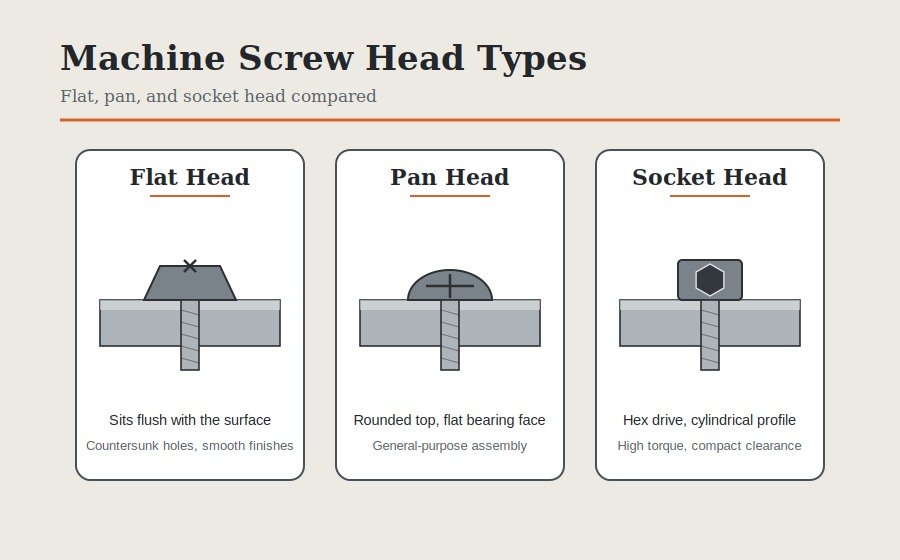
Flat head screws sit flush with the surface once installed, making them the go-to choice where a smooth finish matters — control panels, enclosures, and decorative hardware.
Pan Head Machine Screws
Pan heads have a rounded top and flat bearing surface, offering a strong, general-purpose option that’s easy to drive and remove. This is the most common head style in general assembly work.
Round Head and Truss Head Machine Screws
Round heads offer a domed profile for a traditional look, while truss heads have a wider, lower-profile bearing surface, useful when clamping thin or soft materials that could deform under a smaller head.
Socket Head Cap Machine Screws
Socket head screws use a hex socket drive and cylindrical head, common in machinery and equipment where high torque and a compact head footprint are needed.
Machine Screw Materials
Material choice affects corrosion resistance, strength, conductivity, and cost.
- Stainless steel (18-8 or 316): Best all-around corrosion resistance; 316 is preferred for marine or chemical exposure.
- Zinc-plated steel: Cost-effective for indoor, low-corrosion environments.
- Brass: Naturally corrosion-resistant and non-sparking, common in electrical fittings and decorative work.
- Nylon and plastic: Non-conductive and lightweight, used where metal fasteners would interfere with circuits or add unwanted weight.
Machine Screw Sizes Explained
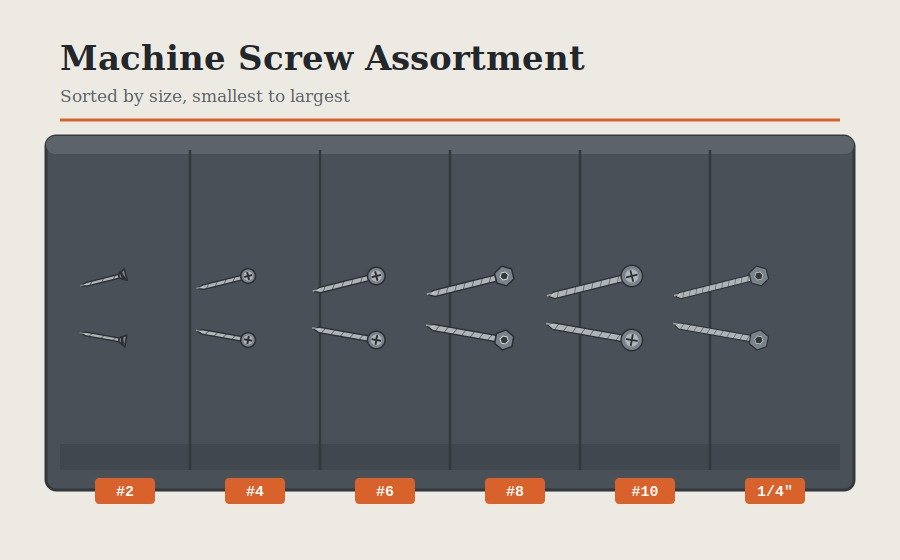
Machine screw sizes follow a standard format: diameter, threads per inch, and length — for example, 6-32 x 3/4″. The first number (or letter/number code for small sizes) indicates the nominal diameter, the second indicates threads per inch (a higher number means finer threads), and the final measurement is the screw’s length. Metric machine screws follow the same logic under the ISO metric screw thread standard, expressed as diameter and thread pitch in millimeters, such as M4 x 0.7 x 20mm. Getting this measurement right before ordering is the single biggest factor in avoiding returns.
Drive Types for Machine Screws
The drive style affects how easily a screw can be installed, removed, and torqued without stripping.
- Phillips: The most common drive for general-purpose work.
- Slotted: Traditional, low-cost, but more prone to cam-out under power tools.
- Torx (star): Preferred in manufacturing for high torque and reduced slippage.
- Hex socket (Allen): Common on socket head cap screws, ideal for tight spaces and high-torque applications.
How to Choose the Right Machine Screw
Start with the application: does the surface need to sit flush (flat head), does the assembly need high torque (socket or Torx), and what environment will the fastener be exposed to (stainless for moisture, brass for electrical)? From there, confirm the exact diameter, thread pitch, and length against the tapped hole or nut you’re pairing it with. When in doubt, a thread gauge and calipers take the guesswork out of matching an existing fastener.
Frequently Asked Questions
What is the difference between a machine screw and a bolt?
Machine screws are typically smaller in diameter, threaded along their entire length, and driven into a pre-tapped hole or nut with a screwdriver-style head, whereas bolts are usually larger, often partially threaded, and driven with a wrench.
What materials are machine screws made from?
The most common options are stainless steel (18-8 or 316) for corrosion resistance, zinc-plated steel for general indoor use, brass for electrical and decorative work, and nylon or plastic for non-conductive or lightweight needs.
How do I measure machine screw size?
Size is expressed as diameter, threads per inch, and length (e.g., 8-32 x 1″). Use a thread gauge for threads per inch and calipers for diameter and length.
Can machine screws be used in wood or drywall?
Not directly — they need a pre-tapped hole, nut, or threaded insert. For wood or drywall, use wood screws or drywall screws designed to self-tap.
What drive types are available for machine screws?
Phillips, slotted, Torx, and hex socket are the most common, with Torx and hex socket preferred for high-torque manufacturing applications.